

One region on earth is legally allowed to make Port, and it starts about 100 km east of Porto. For travelers already booked into the city and trying to bolt on a Douro Valley Porto excursion in the next day or two, the decision is really three questions stacked: how to get there, how long to stay, and what to actually do once there. Here’s the short version: the drive is about 1.5 hours by car, 2 to 2.5 hours by train to Pinhão, or 6 to 8 hours if a traveler cruises the river one way. A Douro Valley Porto day trip covers one quinta and lunch; an overnight unlocks the eastern valley and a slower cruise. This guide provides the numbers to pick fast.
How Far the Douro Valley Is From Porto (Car, Train, Boat at a Glance)
The Douro Valley sits roughly 100 km east of Porto. By car it’s about 1.5 hours on the A4 motorway. By train to Pinhão it’s 2 to 2.5 hours, tickets around 14 to 20 euros each way. By boat, a full one-way river run takes 6 to 8 hours. Here’s the fast comparison before any detail.
| Mode | Time (one way) | Rough cost | Best for |
|---|---|---|---|
| Car | ~1.5 hrs | Fuel + tolls (~15-25 euros) | Control, reaching remote quintas |
| Train | 2 to 2.5 hrs | 14-20 euros | Cheapest, relaxed, no driving |
| Boat | 6 to 8 hrs | 60-120 euros | Scenery, once-in-a-trip river views |
Most travelers drive or train in and save the boat for one leg. That single choice shapes everything below.
How to Read This Comparison
The right mode depends on the priority. For control and reaching estates off the rail line, the car wins. For lowest cost and zero driving, the train wins. For the river itself, the boat wins but eats the day. Almost no one takes the full boat run both directions, and the sections below explain why.
Porto to Douro Valley by Car: Route, Time, and Parking
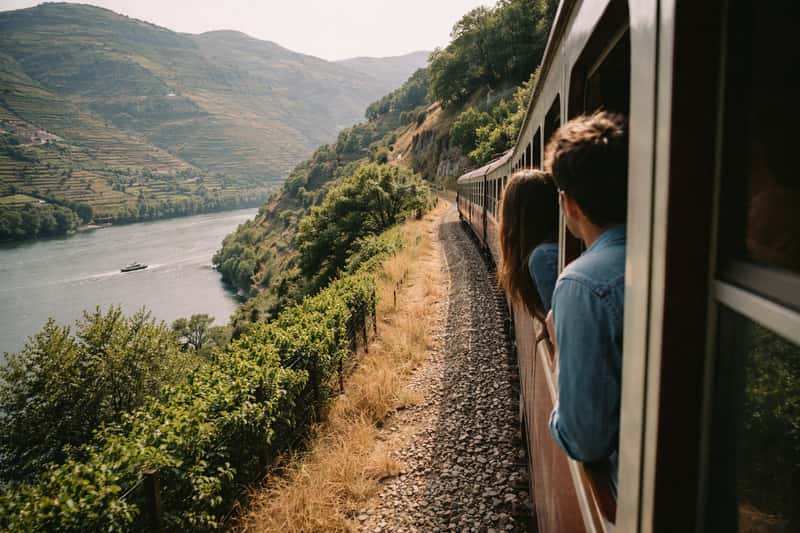
Driving gives the most control and reaches quintas that trains and buses skip entirely. Two roads matter: the A4 motorway, which is fast and dull, and the N222 river road, which is slow and is the one in every photograph. There’s no need to pick one for the whole trip. Take the A4 out and the N222 back, or reverse it.
Self-Drive Route From Porto to Pinhão, Stop by Stop
Take the A4 east from Porto to Peso da Régua in roughly an hour. Régua is worth a stop for the Douro Museum and a coffee before the twisty part. From Régua, drop onto the N222 for the stretch into Pinhão, about 25 km that hugs the river past terraced hillsides. Pull over at the Régua-to-Pinhão viewpoints. This last leg is winding and slow, so budget 40 minutes for a distance that looks like 20 on the map.
Parking and Driving Trade-Offs
The catch is obvious once it’s said out loud: someone has to stay sober for the tastings. Rural roads, tight village parking in Pinhão, and blind river bends all eat time. A car earns its keep for two or three quintas in a day, or estates off the train line. For a plan of one tasting and lunch near the station, the train saves the parking hunt and the designated-driver problem.
Train From Porto to Douro Valley: Stations, Schedules, and the Pinhão Line
The train from Porto to Douro Valley is the cheapest and most relaxed way in, and the final stretch runs right along the water. Trains leave from Porto Campanhã, with some connecting through São Bento, and the ride to Pinhão runs 2 to 2.5 hours for roughly 14 to 20 euros. Trains are limited to a handful of useful departures a day, so check the timetable the night before and grab a river-side seat for the last hour. The valley has been a wine region since 1756, and the rail line threads straight through its heart. Portugal’s official Douro overview is a solid sanity check on seasonal service before committing.
Where the Train Drops You and What Sits Within Walking Distance
Pinhão station puts travelers steps from the river and within a short walk or taxi of several quintas. That’s the upside. The limit is real too: without a car, a visitor is tied to walkable estates or a pre-arranged pickup. Book a quinta transfer ahead, or plan to taxi, because Pinhão is small and cabs are not always idling at the door.
Douro Valley Boat Tour From Porto: Cruise Length and Where You Land
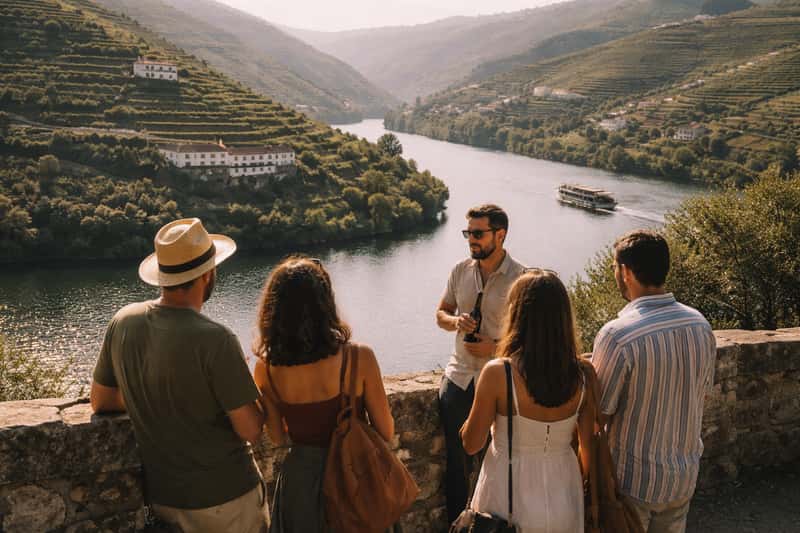
A Douro Valley boat tour from Porto is the slowest way to travel and the most scenic, which is why almost no one does the full river both directions. A one-day cruise covering the full run is 6 to 8 hours on the water. Shorter segments, like Régua to Pinhão, fit inside a day trip and give the best river hour without the marathon.
One-Way Cruise Plus Train Return
The common hack: cruise one direction, take the train back. That covers the river views without an all-day round trip on the water. A typical version is a morning cruise upriver to Régua or Pinhão, lunch and a tasting, then the 2 to 2.5 hour train home. Plan on a long day, roughly 8 to 10 hours door to door, but it delivers the valley from both the river and the rails.
One Day, Two Days, or Overnight, A Straight-To-The-Point Recommendation
This is the decision. Match stay length to what’s realistically visible, and it takes under a minute to pick.
One Day From Porto
A day trip delivers one or two quinta visits, a tasting, lunch, and the ride back. That’s it, and it’s enough for a lot of people. It suits travelers who want a taste of the valley without rearranging their Porto plans. It will feel rushed for anyone chasing the eastern valley, multiple estates, or an unhurried cruise, because the return clock starts ticking by mid-afternoon.
Two Days or an Overnight
Staying over unlocks the eastern valley, a second quinta, and a river cruise without a sprint. An overnight allows an afternoon tasting without watching the last train. For anyone who cares about the wine and not just the view, stay over. One relaxed evening in the vineyards changes the trip from a checkbox into an actual visit.
Base in Porto or Stay in Pinhão, The Honest Call
For most travelers already booked into Porto, base in Porto and day-trip in. That keeps the city hotel, the dinner options, and the flexibility, and the valley is close enough that a single day covers the essentials. Stay in Pinhão only for two full valley days or a genuinely slower pace.
When Pinhão Is Worth the Move
Move to Pinhão for harvest season, when the estates run grape-picking experiences, or when the plan is three-plus quintas without tired drives between them. It’s also the call when waking up in the vineyards is the point of the trip. Set expectations though: Pinhão is tiny. Dining is limited, nightlife is basically the hotel bar, and the draw is the wine and the quiet, not the scene.
Why Port Comes Only From the Douro (and What That Means at a Tasting)
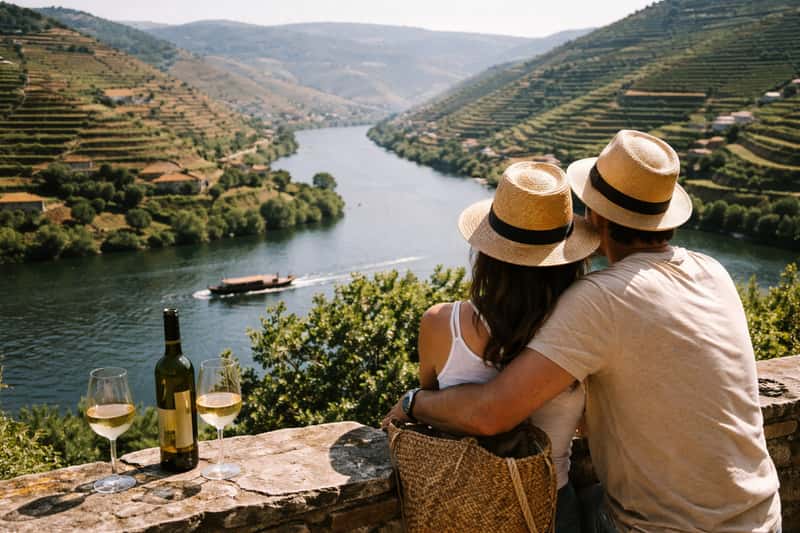
Here’s the fact that reframes the whole trip: the Douro is the only place on earth legally allowed to make Port. The region was formally demarcated in 1756, one of the oldest protected wine areas in the world. Those terraced hillsides in every photo are not decoration. They’re the reason the wine tastes the way it does, the hand-built answer to growing vines on steep schist slopes. A Port tasting at a quinta is the direct output of that geography and three centuries of rules about what qualifies.
Reading a Tasting: What to Ask For
A quinta tasting usually walks through white, ruby, tawny, and sometimes vintage Port, often alongside a dry Douro table wine made from the same grapes. Ask why the table red differs from the Port, when the fortification happens, and how the estate’s altitude and slope change the fruit. Those three questions turn a photo stop into a real lesson.
Planning the Visit: Quintas, Bookings, and Timing
Now make it a plan. The difference between a rushed day and a good one is usually two things: booking ahead and knowing the last ride home.
Quintas That Fit a Short Trip
For a tight schedule, pick an estate close to Pinhão or Régua, walkable or a short taxi from the station, with fixed tasting slots. Book directly and confirm the time rather than gambling on a walk-in, especially from May through October when slots fill. Two nearby quintas is a comfortable day-trip ceiling; three means a car and a driver who isn’t tasting.
Timing the Day So the Last Ride Back Isn’t Missed
Map the clock before leaving. Morning departure from Porto, first tasting around noon, lunch, one afternoon estate, then the return leg. Check the last train or last cruise time first, because in the valley “we’ll catch the next one” can mean a two-hour wait or an unplanned Pinhão overnight. Build a buffer of at least an hour before that final departure.
Base in Porto, drive or train into the valley for a full day, and taste at a booked quinta near Pinhão or Régua. If the wine matters more than the photos, add an overnight and slow down. Either way, the thing in the glass is worth remembering: the only Port on the planet, from the one place that’s legally allowed to make it.
FAQs about Douro Valley Porto
How far is the Douro Valley from Porto?
The Douro Valley starts roughly 100 km east of Porto. That translates to about 1.5 hours by car, 2 to 2.5 hours by train to Pinhão, or 6 to 8 hours for a full one-way river cruise.
What is the best way to get from Porto to Douro Valley?
The train is cheapest and most relaxed, the car gives the most freedom to reach remote quintas, and the boat is the most scenic but slowest. Most travelers train or drive in and use the boat for one leg only.
How many days do you need in the Douro Valley?
One day covers a single quinta, a tasting, and lunch. Two days or an overnight unlocks the eastern valley, a second estate, and an unhurried cruise. Stay over for anyone who cares about the wine and not just the view.
Is the Douro Valley worth visiting as a day trip from Porto?
Yes, for one or two quinta visits and a tasting without changing existing Porto plans. It feels rushed only when chasing multiple estates or a full-length river cruise in the same day.
How long does the train from Porto to Pinhão take?
The Pinhão line runs about 2 to 2.5 hours from Porto Campanhã, with tickets around 14 to 20 euros each way. Trains run a limited number of useful times daily, so check the schedule the night before.
Can you do a Douro Valley boat tour from Porto?
Yes. A full one-way river cruise runs 6 to 8 hours, and shorter segments like Régua to Pinhão fit a day trip. A popular option is cruising one direction and taking the train back.
Do you need a car to visit the Douro Valley?
No, but a car helps for multiple quintas or estates off the train line. Without one, stick to walkable estates near Pinhão or Régua, or arrange a quinta pickup in advance.
Should you stay in Pinhão or base in Porto?
Base in Porto and day-trip in for most short visits. Stay in Pinhão only for two full valley days, a harvest visit, or multiple quinta tastings with a morning wake-up among the vineyards.
Why is Port wine only made in the Douro?
The Douro was formally demarcated in 1756, and Port is legally produced only within that region. The terraced schist hillsides and centuries of regulation are exactly why the wine tastes the way it does.
Do you need to book quinta tastings in advance?
In high season, from roughly May through October, yes. Estates run fixed tasting slots that fill up, so book directly and confirm the time rather than risking a walk-in that may be full.