

You have a destination in mind and no idea how to make the trip feel like one thing instead of fifteen disconnected stops. A travel aesthetic fixes that: it’s a style direction you book against, deciding where you stay, when you go, and what you pack. Name yours in five minutes and you’ll book smarter within the day, because every choice stops fighting every other choice.
What a Travel Aesthetic Actually Means for Your Trip
A travel aesthetic is a style direction you can book against, not a filter you apply after the fact. Most articles sell it as a mood board: pretty images, no decisions. That version is useless the moment you open a booking tab. The practical definition is different. Your aesthetic is the thing that answers three questions before you spend money, which hotel type, which month, which packing list.
Travel style is broader (are you a planner or a wanderer, a hostel person or a resort person). An aesthetic sits underneath that as the visual and emotional register of the trip. Minimalist and maximalist travelers can both be planners. The aesthetic decides tone. When you treat it as a planning tool instead of a Pinterest board, it does real work: it cuts your destination shortlist, narrows your dates, and tells you what to pack in one hour instead of a weekend of second-guessing.
Why the 2026 Winning Aesthetic Is Quiet, Not Staged
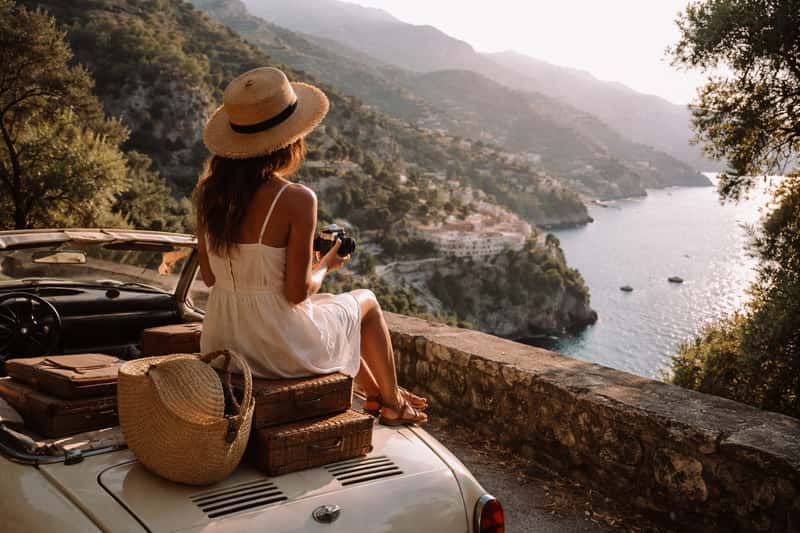
Here’s the counterintuitive part. The most photogenic trips right now are the quietest ones. Coverage across Hilton, SmartFlyer, Livingetc, and Forbes in 2026 points the same direction: restraint over maximal staging. Hilton calls it hushpitality, the demand for screen-free, calm, solitary recovery. Forbes frames the whole year as travel that is about emotion, not destination. What that means for your choices is concrete: fewer stops, longer stays, less noise. The staged fifteen-temple sprint photographs worse than one unhurried morning in a single place.
The Shift From “Where” to “Why”
Travelers now pick trips by feeling and intent, not just a destination photo. That flips your shortlist. Instead of starting with a place, you start with the state you want (calm, nostalgic, romantic, adventurous) and let that filter the map. Emotion-led planning kills the trap of booking somewhere because it looked good on a screen, then arriving to a feeling that doesn’t match.
What Restraint Looks Like in Practice
You can spot a quiet trip before you book it. Markers: screen-free stretches built into the day, unhurried mornings with no 8 a.m. departure, one strong location instead of five rushed ones. If your draft itinerary has a checklist of sights and a train every afternoon, that’s a staged trip wearing a calm caption. Cut it to a third and you’ll have the real thing.
How to Choose Your Travel Aesthetic in Five Minutes
Skip the trend list. Run four questions instead. First, the feeling you want (calm, romantic, rugged, nostalgic). Second, the pace you can actually handle (one base or three cities). Third, your budget ceiling, stated as a real number per night. Fourth, the season you’re locked into, because your dates are usually fixed before your style is. Answer those four and you’ve already eliminated most named aesthetics below. The one that survives all four constraints is yours.
Match the Aesthetic to the Trip You Already Have
Your dates, destination shortlist, and travel companions narrow the field faster than any quiz. Traveling with kids in July rules out the silent-retreat register no matter how much you love it. A fixed long weekend rules out slow travel across three regions. Reverse-engineer from the constraints you can’t change. Global travel demand keeps climbing (WTTC, 2024), so popular windows book out early, which is another reason to let your locked dates pick your style rather than the other way around. If you’re stitching multiple stops, the sector trend data confirms shoulder-season travel is where the quiet-trip value lives.
The Minimalist Travel Aesthetic
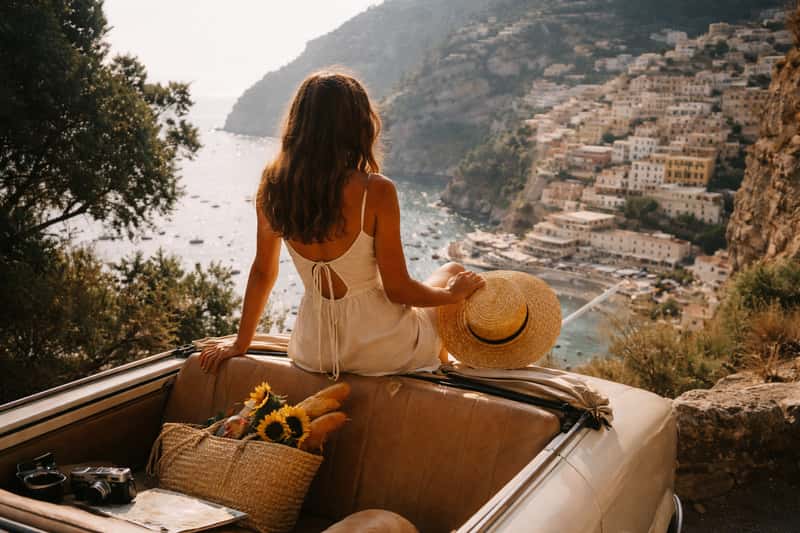
The minimalist travel aesthetic runs on restraint: neutral palettes, single-base trips, design-led stays, and a deliberately short list of things to do. It’s the cleanest fit for the quiet-luxury direction, so pair it with slow travel. One base, one region, mornings that don’t start with an alarm. You photograph fewer things and each one better.
Destinations That Fit
Real matches: Kyoto for temple gardens and machiya stays, the Douro Valley near Porto for terraced vineyards, and the quieter corners of northern Japan or inland Portugal. These reward staying put. For a bookable next step, see the site’s Kyoto guide to decide whether one base beats a rushed loop.
Packing and Outfit Cues
A tight capsule wardrobe in two or three colors. One bag. Structured neutrals that mix without thinking: two trousers, three tops, one overshirt, one pair of leather sneakers, a linen scarf. Everything works with everything, which is the whole point. Pack it in an hour.
Quiet Luxury Travel
Quiet luxury travel is about comfort, personalization, and intuitive service, not status cues on display. Capital One’s survey of more than 3,000 U.S. luxury travelers found affluent travelers now prioritize authentic connection and moments that matter over logos and price tags (Travel + Leisure, 2026). This is a feeling, not a receipt.
Destinations and Where to Stay
Think heritage stays, design-forward hotels, and rail journeys: Paris for a small Left Bank property, rural Italy for a converted farmhouse, or the Swiss rail routes for slow scenery. The aesthetic changes your booking mechanics. You choose smaller properties over big-name resorts, longer stays over city-hopping, and off-peak dates over the crowded window. Use the site’s Paris travelers guide to pick a neighborhood before you pick a hotel.
Packing and Outfit Cues
Understated fabrics, quality over logos, a palette that photographs calm. A cashmere crew, tailored trousers, a well-cut trench, loafers, one good watch. Nothing shouts. Everything reads expensive because it fits and it’s quiet.
Slow, Nature-Led, and Nostalgia Aesthetics
Cottagecore, farm stays, and heritage travel share one register: lived-in, story-rich, weather-dependent. This is a real booking pattern, not a mood board. Working-farm stays and agritourism properties are small and book out months ahead, especially over harvest season, so lead time matters as much as the aesthetic. People are choosing the quiet countryside on purpose, and the good ones sell out early.
Destinations and Booking Timing
Point yourself at rural stays and scenic loops: working-farm regions in Italy or Portugal, or Meghalaya’s five-day route through living-root bridges and rain-fed valleys. Timing matters more here than anywhere, because each aesthetic depends on a season. Meghalaya rewards the post-monsoon window when the greens are loudest and the roads are open. For a ready itinerary, plan against a real distance breakdown like the site’s Arunachalam to Golden Temple route.
Packing and Outfit Cues
Earth tones, natural fibers, practical layers for weather you can’t control. A waxed jacket, wool socks, one waterproof shell, sturdy boots. Weather first, looks second, because the look here comes from the setting, not the outfit.
Set-Jetting and Literary Travel Aesthetics
Set-jetting and book-themed travel pin your destination to a specific film, show, or book, which makes shortlisting almost automatic. Expedia’s 2024 traveler survey reported 66% of travelers say their trips were influenced by places seen in movies or TV. One reference does the work a whole planning session usually takes.
How Media Choices Drive Your Itinerary
A single scene decides your route, your stops, even your season. The method: pick the reference, list the three or four real locations it used, then map them against your available days and the season the story was set in. Real anchors work best. Taormina and the Sicilian coast drive bookings off The White Lotus season two. Dubrovnik’s old town still pulls Game of Thrones fans as King’s Landing. New Zealand’s South Island runs on The Lord of the Rings. Turn the scene into a day plan by anchoring one location per morning and leaving the afternoons open.
Turning Your Chosen Aesthetic Into a Booked Trip
Whichever style you landed on, it now sets three things: your accommodation type, your travel dates, and your route. Minimalist means one base and off-peak dates. Quiet luxury means a small property booked early. Slow and nature-led means the right season above all. If you’re building a multi-stop version, the site’s distance and route guides give you real driving times and halfway points so the calm trip doesn’t collapse into a logistics scramble. The quiet trip wins in 2026 because a named aesthetic turns a vague feeling into a hotel type, a date range, and a packing list you can act on.
Your 24-Hour Action Step
One concrete move today. Minimalist: shortlist one design-led stay in Kyoto or the Douro and check a five-night block. Quiet luxury: pick one small Paris or rural-Italy property and price an off-peak week. Slow nature: lock the season for a farm region or the Meghalaya loop and check flights. Do the one move now. Don’t save the article.
FAQs about travel aesthetic
What does travel aesthetic mean?
A travel aesthetic is a style direction that shapes real planning decisions, where you stay, when you go, and what you pack. It’s a booking tool, not just a photo filter or a mood board.
What are the most popular travel aesthetics in 2026?
The strongest 2026 aesthetics are quiet luxury, minimalist and slow travel, farm-stay nostalgia, and set-jetting. The common thread is restraint and calm over heavily staged, high-volume itineraries.
How do I create a travel aesthetic for my trip?
Answer four questions: the feeling you want, the pace you can handle, your budget per night, and the season you’re locked into. Match those answers to one named style, then book against it.
What is the difference between a travel aesthetic and travel style?
Travel style is broad (planner versus wanderer, budget versus resort). A travel aesthetic sits underneath as the visual and emotional register of the trip, and it decides the tone of your specific bookings.
What destinations match a minimalist travel aesthetic?
Kyoto, the Douro Valley near Porto, and quieter corners of inland Portugal or northern Japan fit best. They reward single-base stays, unhurried mornings, and design-led accommodation over city-hopping.
What is quiet luxury travel?
Quiet luxury travel prioritizes comfort, personalization, and intuitive service over status cues. In practice it means smaller properties, longer stays, off-peak dates, and understated wardrobes rather than logos and price tags.
What are the best travel aesthetics for photos?
Counterintuitively, the quietest ones. One strong location shot in good light beats five rushed stops, so minimalist and quiet-luxury trips tend to produce the most cohesive travel aesthetic pictures.
How many destinations should a single aesthetic trip include?
For minimalist and quiet-luxury styles, one base or two at most. Slow, nature-led trips can run a short scenic loop of three to five stops if the pace stays unhurried.
What should I pack for a minimalist travel aesthetic?
A capsule wardrobe in two or three neutral colors, one bag, structured pieces that all mix: two trousers, three tops, one overshirt, leather sneakers. You can pack it in an hour.
Is a travel aesthetic the same as old money or Euro summer?
Those are micro-labels inside broader aesthetics. Old money overlaps with quiet luxury, and Euro summer leans coastal and casual. Pick the parent style first, then borrow the label if it fits your trip.